Sports medicine focuses on diagnosing, treating, and rehabilitating injuries that affect athletic performance and physical activity. Common injuries include ankle sprains, ligament tears, and shoulder strains, which may result from sudden movements or repetitive stress. Through physical examinations, imaging, and personalized rehabilitation plans, specialists address injuries while helping patients restore strength, mobility, and joint stability. Here is more information about the intersection of sports medicine and injury recovery:
Diagnosing Sports Injuries
Sports injury diagnosis typically begins with a physical examination and a review of how the injury occurred. A sports medicine physician assesses swelling, strength, and range of motion to identify possible damage to muscles, ligaments, or joints. Depending on the findings, imaging tests such as X-rays or MRIs may help determine the injury’s severity and guide treatment decisions.
Early evaluation helps identify injuries that may worsen with continued physical activity or repetitive movement. Because symptoms vary depending on the affected area, physicians develop treatment plans based on examination findings and individual recovery needs. Treatment recommendations may include rest, rehabilitation, or additional medical interventions to address the injury and support recovery.
Treating Soft-Tissue Damage
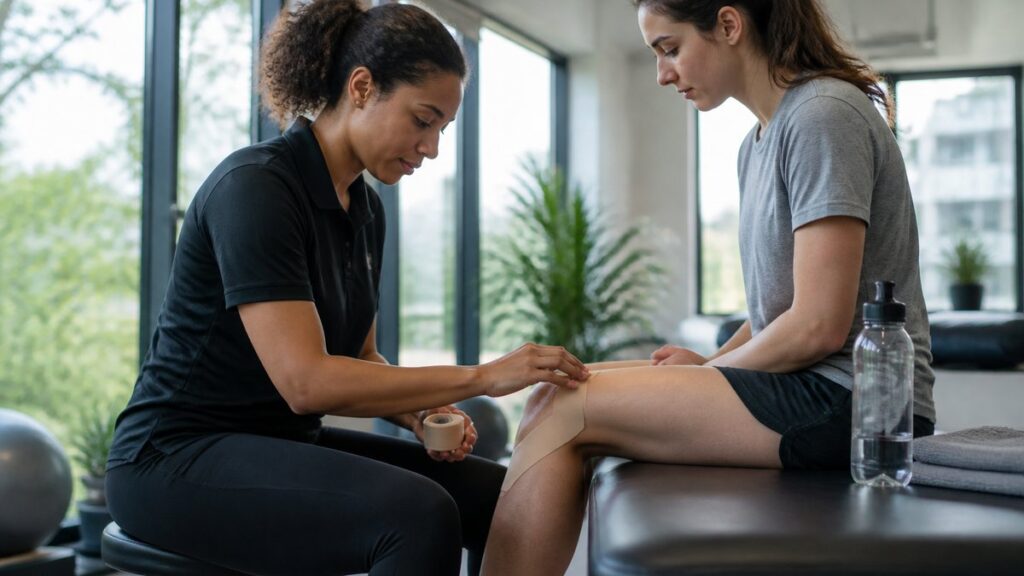
Soft-tissue injuries, including sprains, strains, and tendon tears, commonly affect muscles, ligaments, and tendons during physical activity. Treatment may begin with rest, ice, compression, and elevation to manage swelling and discomfort before progressing into rehabilitation. Because recovery needs vary, physical therapists introduce controlled movements and targeted exercises to help restore flexibility, strength, and joint stability. Additional treatment options may include:
- Using ultrasound therapy to support soft-tissue treatment
- Applying braces or tape to support injured joints
- Performing stretching exercises to improve flexibility
- Incorporating manual therapy to address restricted movement
Recovery timelines depend on injury severity, and providers adjust rehabilitation plans based on healing progress and individual treatment needs.
Rebuilding Strength Safely
As pain and swelling decrease, rehabilitation often shifts toward rebuilding muscle strength and joint stability. Weakness around an injured joint may increase the risk of reinjury, so therapists introduce strengthening exercises gradually. Treatment plans vary depending on injury severity, physical abilities, and recovery progress.
Patients typically begin with low-resistance exercises before progressing to resistance bands, weights, and more challenging movements. Physical therapists monitor strength, mobility, and functional performance to evaluate recovery. As patients regain strength, providers adjust exercise intensity based on individual progress and treatment goals.
Balance and proprioception training may also support recovery by improving coordination and awareness of joint positioning. These exercises help patients regain control during movement, particularly when returning to sports or physical activities. Because recovery timelines differ, therapists use functional assessments to guide progression toward regular activity.
Preventing Future Injuries
Sports injury prevention often continues after symptoms improve, focusing on movement patterns, strength, and physical conditioning. Specialists help identify muscle imbalances or improper techniques that contribute to injuries, then recommend exercises to address these concerns. Because sudden increases in physical activity may raise injury risks, providers often recommend gradual training progression and appropriate warm-up routines. Proper footwear, strengthening exercises, and movement training also help athletes maintain joint stability and reduce unnecessary strain. These preventive strategies support long-term physical function while helping athletes prepare for a return to regular sports activities.
Schedule With Sports Medicine Today
Sports injury recovery involves a structured approach that combines diagnosis, treatment, rehabilitation, and preventive care. Because injuries vary in severity, sports medicine specialists develop personalized treatment plans based on individual symptoms and physical needs. Rehabilitation may involve strengthening exercises, mobility training, and gradual activity progression to support recovery and reduce the risk of reinjury. Schedule a sports medicine evaluation today to discuss your symptoms and explore treatment options for returning to physical activity.