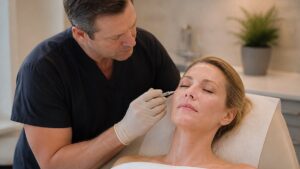
Hair restoration surgery gives people with pattern baldness or thinning hair a way to redistribute their existing growth. When topical products or medications don’t deliver results, a hair transplant offers an alternative by moving healthy follicles to areas affected by thinning. Techniques such as follicular unit extraction (FUE) make the process more precise; they help surgeons tailor the work to the patient’s hair type and goals. Understanding how each method works helps patients plan a procedure that fits their lifestyle and recovery tolerance.
What Is a Hair Transplant?
A hair transplant is a surgical procedure in which healthy follicles are moved from a donor region to areas with thinning or no hair. The donor region usually has hair that grows more reliably, and the transplanted follicles keep those growth traits after relocation. FUE, or follicular unit extraction, is one of the main approaches for harvesting those follicles. Each method follows the same basic idea, but how follicles are collected and placed affects scarring patterns and scalp healing.
What Are the Different Methods?
Surgical hair restoration falls into two categories: FUE and FUT (follicular unit transplantation). Both methods move stable follicles into thinning regions, and they aim for results that blend with the patient’s existing hair. The main difference is how the follicles leave the donor site and how the donor site looks after healing. Since both methods involve anesthesia and a recovery period, a surgeon will match the technique to the patient’s hair characteristics and their long-term styling plans.
FUE involves removing one follicular unit at a time from the donor zone using circular punches. Because the punches are small, the donor area may show many tiny round marks, which usually blend as the hair grows short. This approach works for people who prefer flexibility with shorter hairstyles; it allows harvesting from broader areas of the scalp. The process requires careful handling of each graft to maintain graft quality.
FUT uses a different harvesting method because the surgeon removes a narrow strip of scalp from the donor region. The strip is then dissected into follicular units under magnification, and those units are placed into the recipient area. The donor site is closed with sutures or staples, and healing leaves a linear scar that sits under surrounding hair. FUT allows many grafts to be obtained in one session.
Which Is Right for You?
The right method depends on the patient’s hair loss pattern and the density of their donor area. A surgeon evaluates the size of the balding region, the quality of the donor hair, and the stability of the hair loss pattern. If the donor zone is dense and the hair loss is advanced, FUT may provide more grafts in a single surgery. If the patient’s loss is moderate and spread over a smaller region, FUE may better align with their goals; it offers more flexibility in donor harvesting.
Medical history and scalp characteristics play a role, and a thorough consultation addresses those details. Certain medical conditions or prior scalp surgeries may limit which method is suitable or how many grafts are available. Some patients have tight scalps that make FUT less practical. A detailed examination lets the surgeon map out a long-term strategy that accounts for future hair loss progression and potential additional sessions.
Seek FUE or FUT Today
People may combine surgery with medical therapies to support long-term hair coverage, and a transplant becomes one part of a broader plan. A consultation with a hair restoration specialist helps you know what to expect. Schedule an appointment today.