Youth athletic participation places repeated physical demands on developing feet and ankles, increasing the risk of sports-related injuries. Sports medicine addresses these concerns through specialized evaluations and treatment plans tailored to growing athletes. When healthcare providers collaborate with families and coaches, young athletes receive guidance that supports recovery and long-term musculoskeletal health. Here is more information about examining the role of sports medicine in youth athletic programs:
Evaluating Sports-Related Foot Injuries
Sports medicine evaluations help identify the causes of foot pain and injuries in young athletes. Providers review symptom history, recent training changes, and activities that increase discomfort. Physical examinations assess foot alignment, flexibility, muscle strength, and walking patterns. When a fracture or growth plate injury is suspected, imaging tests may be recommended for further evaluation.
Early evaluation helps identify injuries that require rest, treatment, or activity modifications. Because continued athletic activity sometimes worsens certain injuries, providers assess symptoms before recommending a return to sports. Treatment recommendations may include supportive footwear, temporary activity restrictions, or additional care based on examination findings. These recommendations also help families and coaches understand appropriate recovery guidelines.
Treating Ankle Sprains and Strains
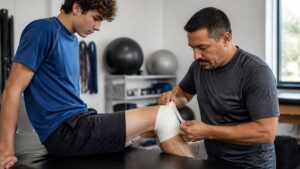
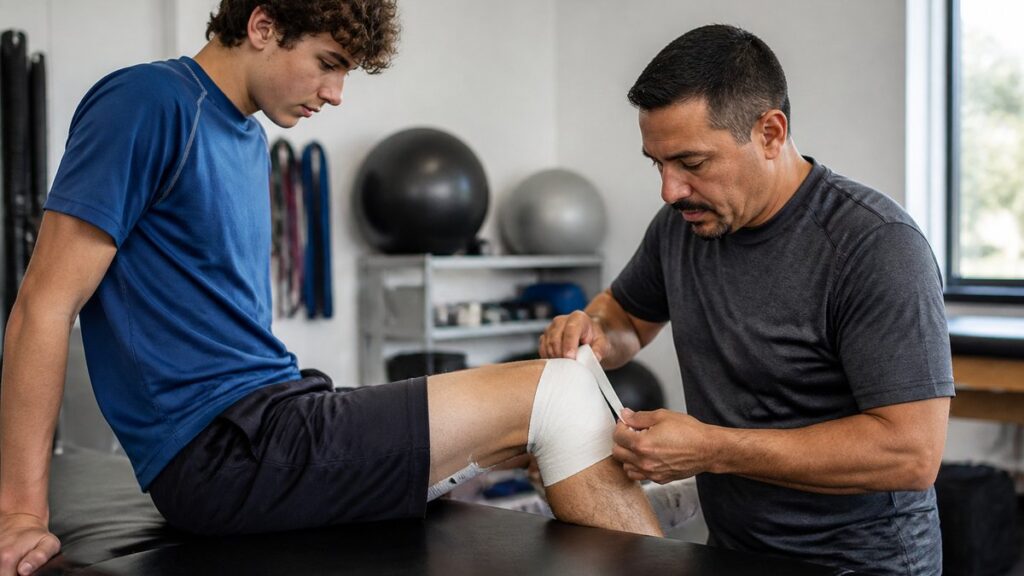
Ankle sprains and strains commonly occur during youth sports involving jumping, sudden direction changes, or uneven surfaces. Sports medicine providers assess swelling, bruising, range of motion, and joint stability to determine injury severity. Treatment plans focus on reducing discomfort, supporting injured tissues, and gradually restoring ankle function. Depending on the injury, providers may recommend temporary activity restrictions and rehabilitation exercises before returning to sports. Common treatment recommendations include:
- Rest and Ice: Reducing discomfort and swelling.
- Rehabilitation Exercises: Improving strength, balance, and stability.
- Bracing or Taping: Providing additional ankle support.
- Activity Modifications: Limiting movements that aggravate the injury.
Managing Stress Fractures
Stress fractures in young athletes often develop from repetitive physical activity that places excessive pressure on bones. Sports medicine providers evaluate symptoms, training intensity, footwear, and recent growth changes to identify potential causes. When a stress fracture is suspected, imaging tests may be recommended to confirm the diagnosis and assess the injury. Treatment typically involves activity modifications, protective footwear or immobilization, and follow-up evaluations to monitor bone healing before returning to sports.
Providing Custom Orthotic Support
Foot structure affects how young athletes walk, run, and perform movements during sports. Custom orthotics provide individualized support based on foot alignment, activity level, and specific symptoms. These devices may help distribute pressure, improve foot positioning, and reduce strain on affected tissues.
During orthotic evaluations, providers assess foot shape, arch height, and walking patterns. They also examine how foot movement relates to athletic activities and recurring discomfort. Based on these findings, providers recommend appropriate orthotic designs and footwear adjustments. As young athletes grow, follow-up evaluations help determine whether their orthotics require modifications or replacement.
Custom orthotics may be combined with strengthening and flexibility exercises to support foot function. Providers often recommend exercises targeting the feet, calves, and surrounding muscles. Footwear recommendations and activity modifications may also be included in personalized treatment plans.
Schedule With Sports Medicine Today
Persistent foot and ankle pain in young athletes may indicate injuries that require medical evaluation. Sports medicine providers assess symptoms, review training habits, and examine affected areas to identify potential concerns. Depending on the findings, treatment may include activity modifications, rehabilitation exercises, or supportive devices to promote recovery. Schedule a sports medicine consultation today to discuss your athlete’s symptoms and explore appropriate treatment options.