Hair loss affects people of many ages and backgrounds, and it can develop for a variety of reasons. Genetics, hormonal changes, stress, nutritional deficiencies, certain medical conditions, and some medications may contribute to thinning or shedding. The most common form, androgenetic alopecia, tends to progress gradually. PRP therapy for hair restoration is a form of treatment that dermatologists may discuss with patients.
What is PRP Therapy for Hair Restoration?
Blood contains red blood cells, white blood cells, plasma, and platelets. Platelets are best known for their role in clotting, and they also carry proteins called growth factors that take part in the body’s natural repair processes. PRP therapy uses a concentrated preparation of a patient’s own platelets suspended in plasma. The procedure generally follows a general guideline, involving:
- A provider draws a small blood sample, usually from the arm.
- A centrifuge spins the sample rapidly to separate it into layers.
- The platelet-rich layer is collected and prepared for injection.
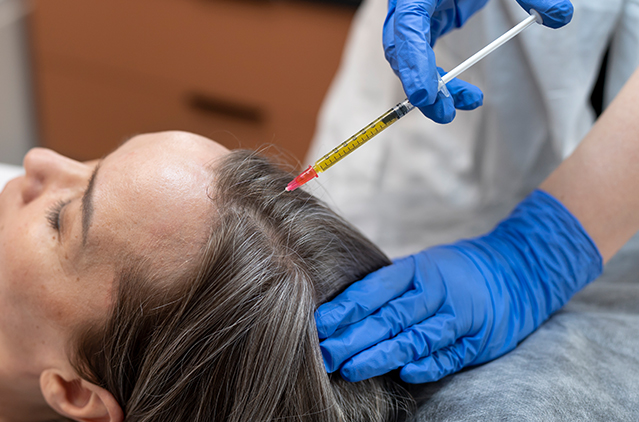
- The provider injects the PRP into the targeted areas of the scalp.
The idea behind the treatment is that delivering concentrated growth factors to the scalp may support the activity of hair follicles. Some providers apply a numbing agent beforehand. Temporary tenderness, swelling, or mild bruising at the injection sites can occur. People typically return to routine activities the same day, but a provider may give aftercare instructions.
Who Is It For?
PRP therapy for hair restoration is not suitable for every type of hair loss, but providers can discuss it with adults who have androgenetic alopecia. The treatment is intended to work with existing hair follicles. As a result, people who still have active follicles in the affected areas may be more likely to see a response than those with large areas of complete baldness.
What Should You Expect?
A dermatologist can examine the scalp, review medical history, and order blood tests. This assessment helps determine whether PRP, as well as another treatment or a combination of approaches, fits a patient’s condition. Dermatologists can pair PRP with guidance on nutrition and gentle hair care habits. Results from PRP therapy differ from person to person; age, the cause and stage of hair loss, overall health, and the preparation technique may all influence outcomes.
Any change tends to be gradual. Hair grows in cycles, so visible differences usually take several months to appear. PRP does not address the underlying cause of hair loss. For this reason, providers often recommend maintenance sessions every six to twelve months. Realistic expectations help patients judge whether PRP aligns with their goals. The treatment is generally intended to support existing hair rather than restore hair where follicles are no longer active.
Confer With a Dermatologist
Timing can shape the available options. Follicles that remain active often respond to a broad range of treatments; those that have been dormant for an extended period may require more targeted methods. Anyone who notices increased shedding, as well as a widening part or a receding hairline, can contact a dermatologist to discuss an evaluation and learn which approaches are appropriate.