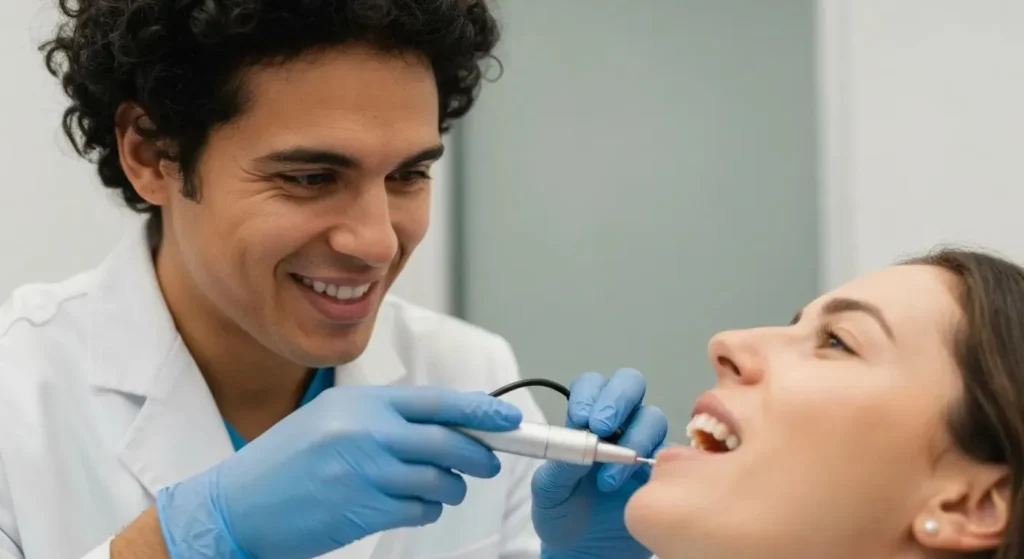
Dental exams involve a visual inspection, X-rays, and a cleaning performed by a dentist or hygienist; patients should prepare by listing current medications, brushing and flossing beforehand, and noting any pain or sensitivity. They can also bring any recent dental records. Because these exams catch cavities, gum disease, and oral cancer early, they protect long-term oral health. Here is more information on what happens during a dental exam, why dentists perform them, and how patients can prepare:
What Do Dental Exams Entail?
Standard dental exams include several distinct steps. The dentist or hygienist begins with a visual inspection of the teeth, gums, and soft tissues inside the mouth, and they check for signs of decay, inflammation, and abnormal growths. X-rays may follow because they let the dentist see structures below the gum line, including the roots and jawbone. When the dentist needs more detail, additional images may be taken.
After the visual and diagnostic review, a hygienist typically cleans the teeth; this step removes plaque and tartar buildup that regular brushing can’t reach, particularly along the gumline and between teeth. The dentist then reviews the findings with the patient, and the two discuss next steps. Depending on the results, the dentist may recommend a filling, address gum sensitivity, or confirm that nothing needs attention until the next visit.
Why Are They Performed?
Dentists perform exams to detect problems before patients notice symptoms. Cavities sometimes develop without pain in their early stages, and a patient may not realize anything is wrong. By the time discomfort appears, the decay may have reached the inner layers of the tooth. Early detection allows for simpler, less invasive treatment.
How Can Patients Prepare?
Preparation starts with communication. Patients should write down any medications they’re taking, since certain drugs affect gum tissue or increase bleeding risk. A list of current symptoms, such as sensitivity, bleeding, or jaw pain, gives the dentist specific details to investigate. Patients may brush and floss before the appointment; this makes the visual inspection and cleaning more efficient. Arriving a few minutes early to complete paperwork helps the appointment start on time.
Some patients may also find it useful to prepare questions in advance, such as:
- Are there specific areas of concern based on my history?
- What’s the recommended timeline for any follow-up treatment?
- Which daily oral hygiene practices would support my current dental health?
How Is Proper Preparation Beneficial?
Patients who prepare for their exam can get more out of the appointment. A clear list of symptoms and medications lets the dentist focus on relevant areas, which can shorten the visit and improve diagnostic accuracy. Detailed information also helps reduce the chance of overlooked issues, and the dentist no longer relies solely on what is visible in the moment.
Preparation additionally supports better long-term outcomes. When patients track changes in their oral health between visits, dentists can spot patterns, such as recurring sensitivity in the same tooth. Patients record the changes, and dentists review them at each appointment. This ongoing dialogue helps improve care.
Prepare for Your Exam Today
Dental exams combine a visual inspection, X-rays, and a cleaning; all are aimed at catching problems early and maintaining oral health over time. Patients who prepare by listing medications, noting symptoms, and bringing questions can get more accurate, efficient care. This preparation supports better detection, clearer communication, and stronger long-term results. If you are due for a dental exam, contact your local dentist.