Skin concerns such as acne, uneven texture, discoloration, and signs of aging can affect the skin’s appearance and overall health. Dermatology focuses on diagnosing, treating, and managing conditions affecting the skin, hair, and nails. Through personalized treatments and specialized procedures, it can improve skin appearance and texture while addressing underlying skin concerns. Here is a closer look at how dermatology helps improve skin appearance and texture:
Identifying Skin Concerns
An evaluation is the first step in any dermatology care plan. During the visit, the dermatologist reviews your medical history, current products, and known allergies, then examines the skin under proper lighting. If a concern involves the scalp or nails, the provider examines those areas as well.
Some evaluations include extra tests. A dermatologist may perform patch testing to check for allergic reactions, or they take a small skin sample for closer review. Once the results are available, the dermatology provider explains the findings, and you receive a written plan that lists the recommended next steps.
Improving Texture
Skin texture refers to how the skin’s surface looks and feels. Rough patches, enlarged pores, and acne scars are common texture concerns, and dermatology providers use several in-office methods to address them. The recommended option depends on skin type, age, and the specific concern.
Chemical Peels and Exfoliation
A chemical peel uses an acid-based solution to remove the outer layer of dead skin cells. The dermatologist selects the peel strength based on your skin type and adjusts the application time accordingly. When the outer layer sheds, the process reveals a smoother-looking surface.
Microneedling and Laser Resurfacing
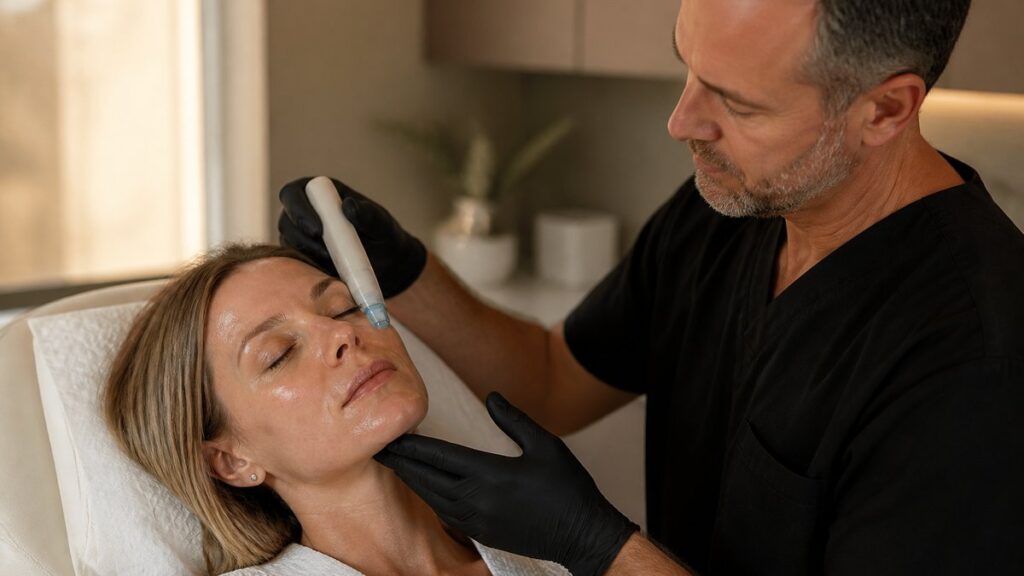
Microneedling uses fine needles to create tiny channels in the skin. This process prompts the skin’s natural repair response. Laser resurfacing directs focused light at specific skin layers, and the dermatologist controls the depth and intensity. Recovery time varies, but most providers give detailed aftercare instructions before the session.
Addressing Discoloration and Uneven Tone
Discoloration includes dark spots, redness, and patches that differ in color from the surrounding skin. Sun exposure, hormonal changes, and past breakouts commonly contribute, and each source requires a different approach. The following options are common in dermatology practices:
- Topical products: Prescription creams and serums are formulated to address excess pigment, and you apply them at home on a set schedule.
- Light-based treatments: Intense pulsed light (IPL) directs broad-spectrum light at visible redness or brown spots during short in-office sessions.
- Chemical peels: Lighter peels address surface-level discoloration across larger areas, such as the face, neck, or hands.
- Sun protection guidance: Dermatologists recommend daily sunscreen use to limit the formation of new spots.
Maintaining Skin Health
Long-term results depend on consistent care after in-office treatment. A dermatology provider builds a routine around your skin type; the plan generally includes a cleanser, moisturizer, and sunscreen. If you have allergies or sensitive skin, the provider recommends products that are free of common irritants, such as added fragrance. Follow-up visits allow the dermatologist to track changes over time. Children’s skin and adult skin have different needs, so providers adjust products and schedules for each age group.
Book Your Dermatology Care Appointment
Dermatology care is tailored to each person’s needs. Providers adjust products and treatments based on age, skin condition, and evolving concerns such as rashes or hair thinning. Regular record-keeping plays a key role, allowing dermatologists to track your progress and fine-tune your care plan for precise and effective treatment. Contact a qualified dermatologist near you to book your dermatology care appointment today.