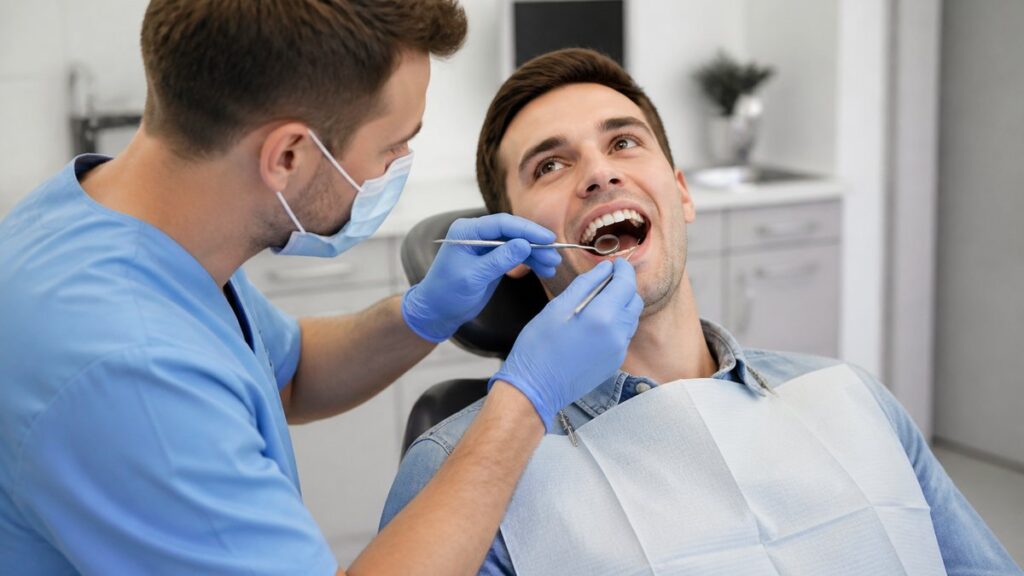
Orthodontics focuses on aligning teeth and jaws, and braces are a standard tool orthodontists use to address these issues. Orthodontists typically complete extra years of training after dental school, and they treat crowded, gapped, and misaligned teeth. Here is more information on each stage of the process:
Consultation Process
When you arrive for your first visit, the orthodontist will ask about your dental history and concerns. The orthodontist then examines your teeth, gums, and jaw alignment. You may also mention any pain or clicking in your jaw, so the team has a full picture.
The team takes X-rays and photos of your mouth, and they may also create digital scans or impressions. For placement, these records show how your teeth and jaws fit together. Some offices complete these records during the first orthodontics appointment.
Braces Placement
Placement takes a few hours, and it is typically painless. For safety, the orthodontist follows a set series of steps. Knowing these steps ahead of time may help you feel more relaxed while you sit in the chair. This involves:
- Cleaning and polishing the teeth
- Applying a mild conditioning solution to the tooth surfaces
- Bonding small brackets to each tooth with dental adhesive
- Hardening the adhesive with a special blue light
- Threading the archwire through the brackets and securing it with small elastic bands
Your teeth may feel sore for a few days after the wires go in. Soft foods like yogurt and pasta help during this period, and over-the-counter pain relievers may ease the discomfort. Your orthodontist will also show you how to brush and floss around the brackets.
Adjustments and Monitoring
You will return to the office about every four to eight weeks. At each visit, the orthodontist checks your progress, and they may replace or tighten the archwire. Some patients receive rubber bands that connect the upper and lower brackets. These bands help shift your bite into its planned position.
Since these visits are short, many patients schedule them before school or work. Mild soreness for a day or two after an adjustment is normal. Keep up with brushing and flossing, and avoid hard or sticky foods like popcorn and caramel. If a bracket breaks or a wire pokes your cheek, call the office for a repair visit.
Brace adjustments are a significant part of the process, and each visit brings you closer to a perfect smile. The orthodontist will assess your progress and may make changes to help refine the alignment further. While these changes are needed, they may also cause mild discomfort, which can usually be managed with over-the-counter pain relief.
Braces Removal
Removal happens once your teeth reach their planned positions. The orthodontist uses a small tool to loosen each bracket. Next, they scrape away the leftover adhesive, and they polish your teeth. The type you receive depends on what your teeth need, and options include:
- Clear plastic retainers that you remove for meals
- Acrylic and wire retainers
- Bonded wire retainers fixed behind the front teeth
Visit an Orthodontics Clinic
Each orthodontic plan follows the same basic stages, but the details vary from person to person. A consultation gives you specific answers about your own teeth. When you book a visit, bring your dental records, insurance details, and questions. Many clinics now offer online scheduling for added convenience.