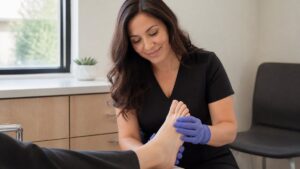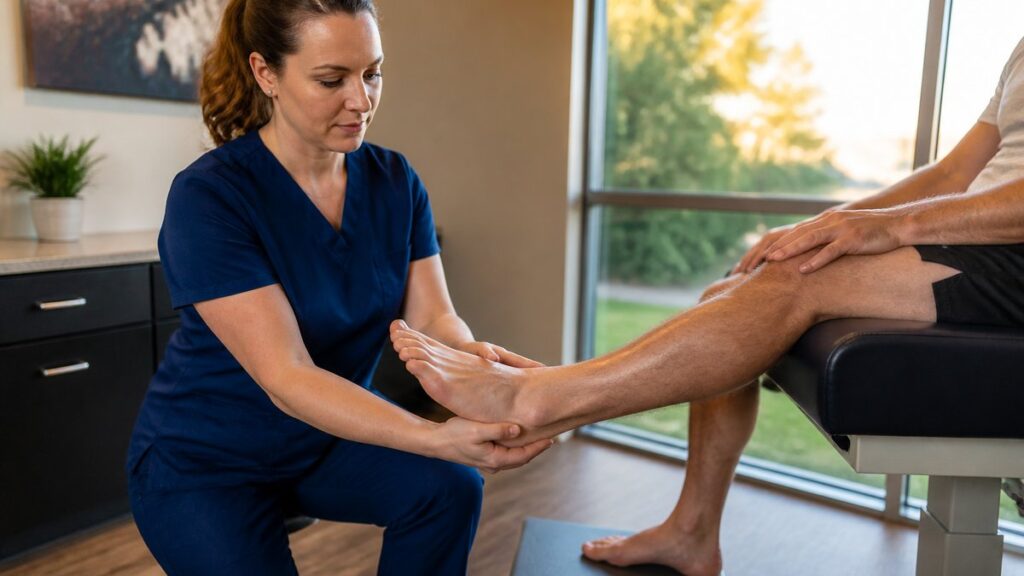
Pes planus describes a flat foot structure in which the arch along the inner sole is low or absent. Some people have flat feet from childhood because their arches never fully develop, while others develop the condition later because of injury, aging, obesity, pregnancy, arthritis, or a weakened tendon. Many people with flat feet have no symptoms. You should visit a podiatrist if you notice persistent pain in your feet, ankles, shins, knees, or lower back, or if your arch appears to flatten over time. Here’s how a podiatrist examines your foot structure to recommend a care plan suited to your condition:
Improving Support
Custom orthotics are shoe inserts made to match the shape and mechanics of your feet. Unlike over-the-counter insoles, which come in standard sizes, custom orthotics are built from a mold, scan, or impression of each foot. A podiatrist evaluates your arch height, foot alignment, and walking pattern before prescribing a design. For people with flat feet, orthotics may help support the arch and distribute pressure more evenly across the sole.
They can also help limit overpronation, which is the excessive inward rolling of the foot during walking or running. This may reduce strain on the connective tissues and joints that absorb impact with each step. Orthotics can be made from rigid, semi-rigid, or soft materials; the choice depends on your:
- Activity Level
- Foot Structure
- Symptoms
Reducing Shin Splints
Flat feet can affect alignment throughout the lower body; when the arch collapses, the foot often rolls inward, and the lower leg rotates in response. This rotation may change the position of the knees and hips, adding stress to the pelvis and lower back. Inward rolling can also strain the muscles and connective tissue along the shinbone, potentially contributing to shin splints. Shin splints, known medically as medial tibial stress syndrome, cause pain along the inner edge of the tibia. Runners and people who stand for long periods may be especially prone to this pain.
To manage these issues, a podiatrist first assesses how your foot mechanics affect the rest of your body, often through a gait analysis and physical exam. Treatment may involve custom orthotics, footwear recommendations, activity modifications, and a gradual return to exercise. Addressing the source of the misalignment helps ease strain on the shins and lower back over time.
Stretching and Strengthening Your Feet
Strengthening exercises focus on the small muscles that support the arch, and podiatrists often recommend targeted exercises to improve flexibility and muscle strength in the feet and legs. Tight calf muscles and a stiff Achilles tendon can pull on the foot and increase stress on the arch. Calf stretches, Achilles stretches, and rolling the sole over a small ball help loosen these tissues. Your podiatrist can demonstrate proper form and recommend how often to perform each movement.
Manage Your Flat Feet Discomfort
Pain signals that something in the foot or ankle needs attention; ignoring it or pushing through it can keep stressing already strained tissues. Unmanaged pain may lead to tendon inflammation, joint stiffness, or changes in how you walk. To improve your foot health, a podiatrist evaluates your symptoms and contributing factors to create your personalized treatment plan. An early evaluation often gives you more options for managing discomfort, helping you stay active with less pain sooner. If flat feet are affecting your comfort or mobility, schedule an appointment with a podiatrist to discuss your options.