An untreated ankle wound can affect the surrounding skin and tissues, with potential consequences for healing and mobility. The long-term effects depend on the wound’s cause, depth, and underlying health factors. Here is more information on the long-term effects of untreated ankle wounds:
Delayed Healing and Chronic Ulcers
Wounds, including an ankle wound, often follow a predictable repair process. The body first clears debris, and then it builds new tissue to close the skin. When this process stalls, the wound remains open longer than expected. Providers often describe a wound as chronic, or long-lasting, when it shows little progress after several weeks, and they look for the factors that keep it open.
The ankle presents specific challenges. Venous ulcers often form near the inner ankle, where poor circulation in the leg veins leads to fluid buildup. Arterial and diabetic ulcers tend to appear on the outer ankle or foot, and pressure ulcers develop where the ankle rests against a bed or shoe, applying steady pressure to the skin.
Spreading Wound Infections
An open ankle wound gives bacteria a direct way into the skin. Some infections stay near the surface, but others move into deeper tissue. When you know the warning signs, you can report changes to a provider. Watch for the following signs:
- Spreading redness: Redness that extends beyond the wound edges or grows larger over time.
- Increased swelling: Swelling that develops around the ankle or worsens instead of improving.
- Drainage changes: Fluid that turns cloudy, thick, yellow, or green, or that develops a strong odor.
- Rising pain: Pain that increases over time rather than easing as the wound ages.
- Warmth or fever: Skin that feels hot to the touch, or fever and chills alongside the wound.
Lasting Damage and Daily Limitations
An untreated ankle wound affects the skin, and it can change surrounding tissue and limit how you move. These effects often build slowly, which makes them easy to overlook. The following sections describe common changes and explain why early attention matters for an open wound.
Tissue and Skin Changes
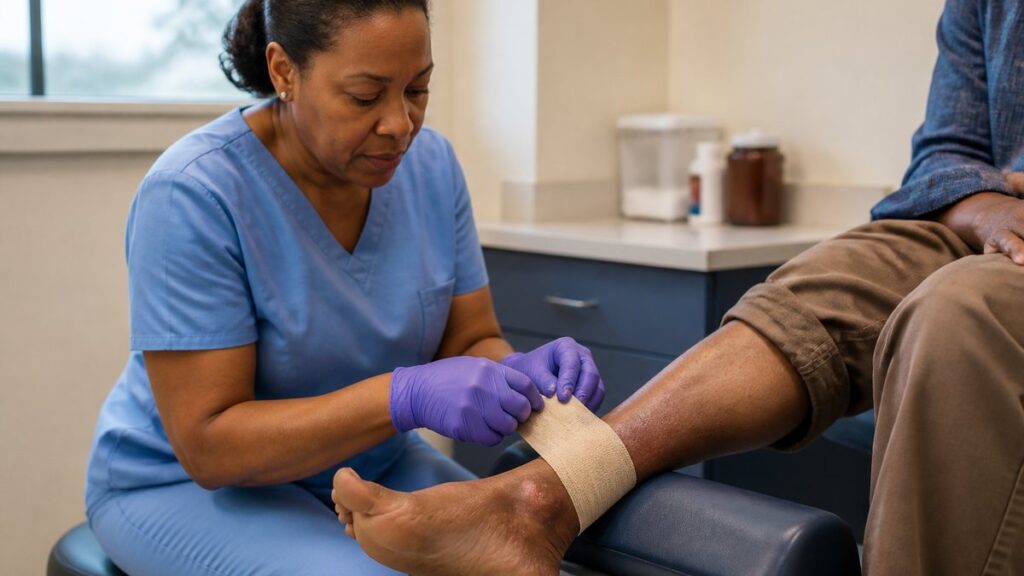
Long-standing wounds often leave behind dead or damaged tissue. Providers often remove this tissue through a process called debridement; they may use skin grafts or surgical repair for larger wounds. When a wound heals after a long delay, the new skin is often thinner and more fragile. Scar tissue forms over the area, and the skin there may break down again with pressure or minor injury.
Movement and Routine Limitations
The ankle supports your weight with every step. A painful wound changes how you walk; this can place extra strain on the knee, hip, or opposite foot. If swelling or scar tissue stiffens the joint, stairs or long periods of standing may become harder to manage. Frequent dressing changes take time, and some people limit work or activity while the wound stays open.
Timely Wound Assessment
A wound assessment gives a clear picture of the wound and its causes. A provider measures the wound and examines the surrounding skin for redness, swelling, or drainage. They may also check circulation, blood sugar, and sensation in the foot to identify factors that slow healing. Timing plays a key role in wound care. Seek an assessment if an ankle wound shows no improvement within two weeks.
Evaluate Your Ankle Wound Today
Proper wound care supports fast healing, reduces complications, and promotes overall recovery. It is key to monitor healing progress and seek medical evaluation if there is no improvement or if signs of infection appear. Individuals with diabetes, vein conditions, or circulation issues are at greater risk of delayed healing and should prioritize early evaluation. To evaluate your ankle wound, contact a qualified wound care specialist near you to schedule your appointment today.