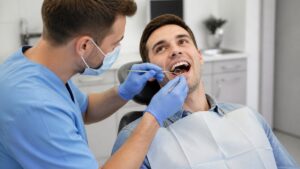
An urgent dental emergency is a problem with your teeth or gums that needs attention within hours, not weeks. This includes a knocked-out tooth, a lost filling or crown, severe toothache, and swelling in the face or gums. These situations often happen outside regular office hours, so knowing the first steps in advance helps you act quickly. Here are some things to do in case of a dental emergency:
Protect the Tooth
Taking immediate steps to protect a damaged or knocked-out tooth helps prevent further injury and improves the chances of saving it. If a permanent tooth has been knocked out, pick it up by the crown (the chewing surface) and avoid touching the root. Rinse it briefly with milk or saline if it is dirty. Do not scrub, dry, or wrap it in tissue. Try to place the tooth back into its socket, then hold it in place by biting down on clean gauze. When reinsertion isn’t possible, store the tooth in a small container of milk. Time matters, and dentists generally recommend seeking care within an hour.
For a cracked or chipped tooth, save any broken pieces in a clean container. Avoid chewing on that side of your mouth. A lost filling or crown leaves the inner tooth exposed. Temporary dental cement from a pharmacy covers the area until your appointment. Keep a loose crown in a sealed bag and bring it with you. If food or another object is stuck between your teeth, remove it gently with dental floss; toothpicks and other sharp tools may injure your gums.
Manage Discomfort
Several at-home steps reduce tooth pain and limit irritation while you arrange urgent dental care. Apply a cold compress to the outside of your cheek to manage swelling, and over-the-counter pain relievers help ease pain. Never place aspirin or any tablet directly on the gums, since this may burn the tissue. Eating soft, cool foods rather than hard, hot, or sugary ones helps make chewing more comfortable. At night, raise your head with an extra pillow, because lying flat may increase throbbing.
Call Your Dentist
Contact your dental office as soon as the immediate situation is under control. Many practices have same-day emergency slots, and some offer an after-hours phone line. When you call, describe:
- What happened
- When it happened
- The affected tooth
- Symptoms like bleeding, swelling, fever, or trouble swallowing
The team uses this information to decide how soon you need to be seen. Some symptoms call for a hospital emergency room instead of a dental office. Go to the ER if swelling spreads to your eye or neck; difficulty breathing or swallowing or a broken jaw are also hospital cases.
Visit an Urgent Dental Clinic
When your regular dentist is closed or fully booked, an urgent dental clinic offers another option for same-day evaluation. Many of these clinics see patients in the evening and on weekends, and some accept walk-ins. The dentist will examine the area, take X-rays if needed, and explain your treatment options. Call an urgent dental clinic near you today to schedule an evaluation.