
Sunlight keeps daily routines moving, but sun exposure is linked to many cases of skin cancer. The link comes from invisible ultraviolet energy, which damages DNA in cells over time. When that damage builds faster than your body repairs it, abnormal cells start to grow. That process does not happen overnight, and habits around sun exposure shape long-term risk.
Repeated Exposure
Short bursts of strong sunlight and years of moderate sunlight both add to total ultraviolet dose, which can lead to skin cancer. Even when skin does not burn, low-level damage still occurs, and repair systems have limits. Patterns such as daily errands, outdoor work, or regular recreation slowly layer exposure. Check these events that can impact your risks:
- Tanning devices deliver concentrated UV, and they add to lifetime exposure.
- Skipping hats, sunglasses, or long sleeves leaves larger areas uncovered for longer periods.
- Relying on sunscreen only during summer leaves spring and fall exposure unaddressed.
Ultraviolet Radiation
UV radiation reaches the ground whenever the sun is above the horizon, and it passes through light cloud cover. These rays sit just beyond visible violet light, so you do not see them, yet your skin absorbs them. One part of this spectrum includes UVA, and another part includes UVB, and each type affects the skin in different ways.
UVA has longer wavelengths, so it penetrates deeper into the skin, and it contributes to aging changes. UVB has shorter wavelengths, and it plays a larger role in sunburn, yet both types damage DNA. When DNA changes accumulate in skin cells, the risk of skin cancer rises, and that risk reflects years of exposure rather than a single day outdoors.
Primary Cause of Skin Cancer
Ultraviolet radiation from the sun is one of the main causes of skin cancer, and the mechanism starts at the cellular level. UV photons strike DNA, causing structural changes that alter how cells divide. When mutations affect growth controls, cells divide when they should rest, and that process sets the stage for tumors.
Skin type shapes how this damage appears, yet no complexion is fully protected. People with lighter skin may burn more easily and show visible warning signs sooner, while darker skin can hide early changes. Repeated injury to the same areas, such as the face, ears, and forearms, raises risk.
Other influences interact with sun exposure. Genetic traits affect how skin repairs DNA, and some medications increase light sensitivity, which amplifies damage from the same sunlight. Immune system health matters as well, since surveillance cells help remove abnormal cells, and weaker surveillance lets damaged cells survive longer.
Required Sunscreen
Daily sunscreen use lowers the dose of ultraviolet radiation that reaches living skin layers, and that reduction limits DNA damage. Broad-spectrum products protect against both UVA and UVB. Regular reapplication keeps that protection stable across the day. Sunscreen works well when paired with shade, clothing, and hats, since each layer reduces exposure, and together they create a more reliable barrier.
Get Checked for Skin Cancer
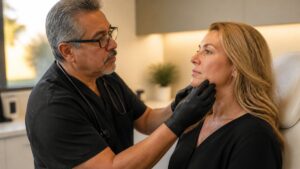
Regular skin exams help catch changes while they stay small, and early treatment often uses less invasive methods. Self-checks between visits help you spot new spots or changing moles, while professional exams bring trained eyes and tools. Routine evaluation supports early detection, and early detection improves treatment options.