Macular degeneration is a common eye condition that mainly affects older adults and can lead to vision problems over time. It damages the macula, a small but important part of the retina that allows us to see fine details clearly. When the macula becomes damaged, everyday activities such as reading, recognizing faces, or driving can become difficult.
Understanding the causes and treatment of macular degeneration is important because early awareness can help slow its progression and protect vision. In this article, we will explain macular degeneration in simple and easy language, including its causes, symptoms, and available treatments.
What Is Macular Degeneration?
Macular degeneration, also known as Age-Related Macular Degeneration (AMD), is an eye disease that affects the central part of the retina called the macula. The retina is the light-sensitive layer at the back of the eye that sends visual signals to the brain.
The macula is responsible for sharp central vision. When it becomes damaged, people may notice blurred or distorted vision in the center of their sight while side vision usually remains normal.
Macular degeneration usually develops slowly and often affects people over the age of 50. However, with proper care and treatment, many people can manage the condition and maintain useful vision.
Types of Macular Degeneration
There are two main types of macular degeneration.
1. Dry Macular Degeneration
Dry macular degeneration is the most common form, accounting for about 80–90% of cases. It happens when the macula gradually becomes thinner with age. Tiny yellow deposits called drusen build up under the retina, which slowly damages the macula.
Vision loss in this type is usually slow and gradual.
2. Wet Macular Degeneration
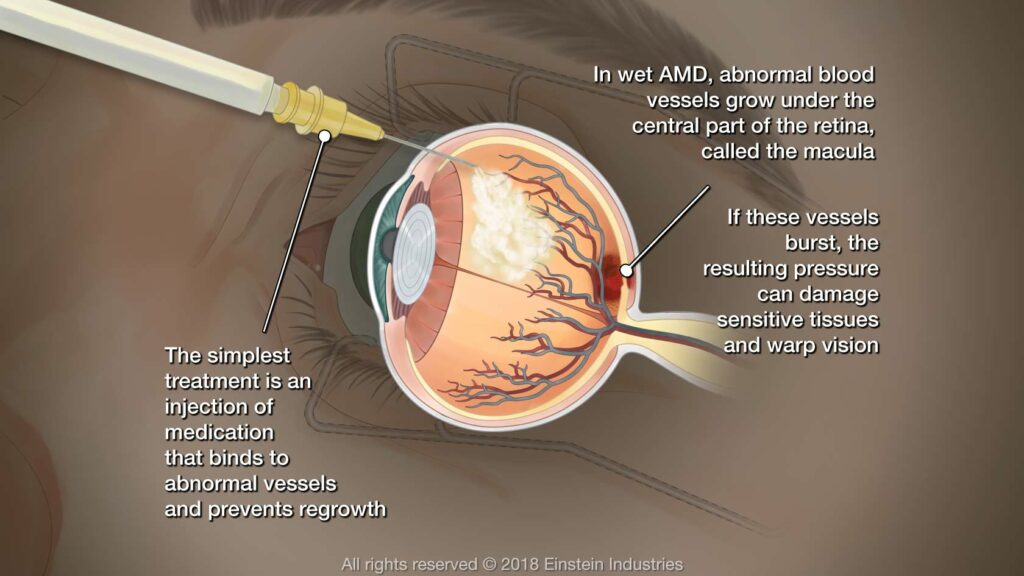
Wet macular degeneration is less common but more serious. It occurs when abnormal blood vessels grow under the retina. These blood vessels can leak fluid or blood, which damages the macula quickly.
Wet macular degeneration can cause sudden vision changes and requires immediate medical treatment.
Causes of Macular Degeneration
There is no single cause of macular degeneration, but several factors can increase the risk of developing the disease.
Aging
The biggest risk factor is aging. As people grow older, the tissues in the retina begin to weaken and become less efficient.
Genetics
Family history plays an important role. If parents or relatives have macular degeneration, the risk of developing it increases.
Smoking
Smoking significantly increases the risk of macular degeneration. Cigarette smoke damages blood vessels and reduces oxygen supply to the eyes.
Poor Diet
A diet low in vitamins and antioxidants can harm eye health. Lack of nutrients such as vitamin C, vitamin E, zinc, and omega-3 fatty acids may contribute to the condition.
High Blood Pressure
High blood pressure can damage blood vessels in the eyes, increasing the risk of macular degeneration.
Obesity
Being overweight may increase inflammation and raise the chances of developing eye diseases including macular degeneration.
Excessive Sun Exposure
Long-term exposure to ultraviolet (UV) light may damage the retina and contribute to macular degeneration.
Symptoms of Macular Degeneration
Macular degeneration may develop slowly, and early stages often show no clear symptoms. As the condition progresses, people may experience:
- Blurry or fuzzy central vision
- Difficulty reading or recognizing faces
- Straight lines appearing wavy or distorted
- Dark or empty spots in the center of vision
- Colors appearing less bright
If any of these symptoms appear, it is important to visit an eye specialist as soon as possible.
How Macular Degeneration Is Diagnosed
Eye doctors use several tests to diagnose macular degeneration.
One common test is the Amsler Grid Test, where patients look at a grid of straight lines to check for distortions.
Doctors may also use optical coherence tomography (OCT) or retinal imaging to examine the retina and detect any damage to the macula.
Early diagnosis helps doctors begin treatment sooner and slow the progression of the disease.
Treatment of Macular Degeneration
Although macular degeneration cannot always be completely cured, many treatments can slow its progression and protect vision.
1. Vitamin Supplements
Doctors often recommend special eye vitamins containing antioxidants and minerals. These supplements can help slow the progression of dry macular degeneration.
Important nutrients include:
- Vitamin C
- Vitamin E
- Zinc
- Lutein
- Zeaxanthin
These nutrients support retinal health and protect eye cells from damage.
2. Anti-VEGF Injections
For wet macular degeneration, doctors often use medications called anti-VEGF drugs. These injections are given directly into the eye to stop abnormal blood vessel growth and reduce leakage.
Common medications include:
- Ranibizumab
- Aflibercept
- Bevacizumab
These treatments can significantly slow vision loss and sometimes improve vision.
3. Laser Therapy
In some cases, doctors use laser treatment to seal leaking blood vessels in the retina. This method helps prevent further damage to the macula.
However, laser therapy is not suitable for all patients and depends on the location of abnormal blood vessels.
4. Photodynamic Therapy
Photodynamic therapy combines a light-sensitive drug with a special laser to destroy abnormal blood vessels under the retina. This treatment is sometimes used for wet macular degeneration.
5. Low Vision Aids
People with advanced macular degeneration can benefit from low vision devices such as:
- Magnifying glasses
- Special reading lamps
- Large-print books
- Electronic visual aids
These tools help individuals maintain independence and perform daily activities more easily.
Lifestyle Changes to Protect Vision
Certain healthy habits can help slow the progression of macular degeneration and protect eye health.
Eat a Healthy Diet
A diet rich in leafy green vegetables, fruits, fish, and nuts supports eye health. Foods such as spinach, kale, salmon, and carrots contain important nutrients for the retina.
Quit Smoking
Stopping smoking can significantly reduce the risk of worsening macular degeneration.
Exercise Regularly
Regular physical activity improves blood circulation and supports overall eye health.
Protect Eyes from Sunlight
Wearing sunglasses that block UV rays can help protect the retina from sun damage.
Regular Eye Exams
Routine eye checkups help detect eye problems early and allow timely treatment.
Living with Macular Degeneration
Many people with macular degeneration continue to live active and fulfilling lives. With proper medical care, lifestyle changes, and supportive devices, vision loss can often be managed effectively.
Learning about the disease and seeking early treatment are key steps in protecting eyesight. Eye specialists, support groups, and vision rehabilitation programs can also help patients adjust and maintain their quality of life.
Conclusion
Macular degeneration is a common eye condition that affects the central vision, especially in older adults. While it cannot always be completely cured, early diagnosis and proper treatment can slow its progression and help protect eyesight.
Understanding the causes and treatment of macular degeneration allows people to take preventive steps such as maintaining a healthy lifestyle, avoiding smoking, and getting regular eye examinations. With the right care and awareness, many individuals can continue to enjoy clear vision and an active life.
Frequently Asked Questions (FAQs)
1. What is the main cause of macular degeneration?
The main cause is aging, but other factors such as genetics, smoking, poor diet, and high blood pressure can also increase the risk.
2. Can macular degeneration be cured?
There is currently no complete cure, but treatments can slow the progression and help protect vision.
3. At what age does macular degeneration usually start?
Macular degeneration most commonly affects people over the age of 50, although early signs may appear earlier in some individuals.
4. How can I prevent macular degeneration?
You can reduce the risk by eating a healthy diet, avoiding smoking, protecting your eyes from UV light, exercising regularly, and having routine eye exams.
5. Is macular degeneration hereditary?
Yes, genetics can play a role. If someone in your family has macular degeneration, your chances of developing it may be higher.