Clear vision is something many people take for granted until they start experiencing problems like blurry sight, difficulty reading, or trouble seeing distant objects. Millions of people around the world rely on glasses or contact lenses to see clearly every day. However, modern medical technology has introduced a more permanent solution known as laser vision correction.
Laser vision correction has become one of the most popular procedures for improving eyesight. It helps people reduce or even eliminate their dependence on glasses and contact lenses. In this article, we will explain how laser vision correction works, how it improves eyesight, its benefits, and what people should know before considering the procedure.
Understanding Vision Problems
Before learning how laser vision correction improves eyesight, it is helpful to understand why vision problems occur in the first place.
The eye works much like a camera. Light enters through the front part of the eye called the cornea, passes through the lens, and focuses on the retina at the back of the eye. The retina then sends signals to the brain, allowing us to see images clearly.
However, when the shape of the cornea is not perfectly curved, light cannot focus properly on the retina. This causes common vision problems such as:
- Nearsightedness (myopia) – Difficulty seeing far objects clearly.
- Farsightedness (hyperopia) – Difficulty seeing objects up close.
- Astigmatism – Blurred or distorted vision at any distance.
Laser vision correction works by reshaping the cornea so that light focuses correctly on the retina.
What Is Laser Vision Correction?
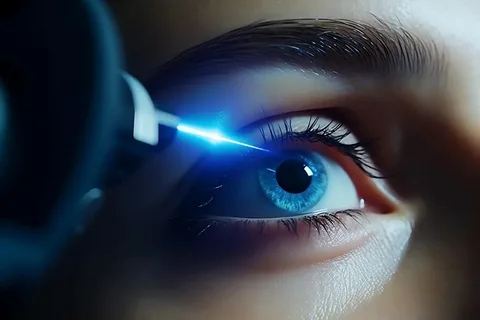
Laser vision correction is a medical procedure that uses a highly precise laser to change the shape of the cornea. By adjusting the curvature of the cornea, the eye can focus light more accurately, leading to clearer vision.
There are several types of laser eye procedures, including:
- LASIK
- PRK
- SMILE
Although the techniques may differ slightly, the goal of each procedure is the same: to improve how light enters the eye and restore clear vision.
How the Procedure Works
Laser vision correction may sound complicated, but the process is actually quick and carefully controlled. Most procedures take less than 30 minutes.
Here is a simple step-by-step explanation of how it works.
1. Eye Examination
Before the surgery, the doctor performs a detailed eye examination. This includes measuring the thickness of the cornea, checking the eye shape, and evaluating overall eye health. Not everyone is a suitable candidate, so this step is important.
2. Numbing the Eye
On the day of the procedure, numbing eye drops are placed in the eye to prevent discomfort. Patients remain awake during the surgery, but they usually feel little to no pain.
3. Creating Access to the Cornea
In some procedures, such as LASIK, the surgeon creates a thin flap on the surface of the cornea. This allows the laser to reach the underlying tissue.
4. Reshaping the Cornea
A computer-guided laser gently removes tiny amounts of corneal tissue. This reshaping corrects the way light focuses inside the eye.
The laser is extremely precise and only works for a few seconds.
5. Healing
After reshaping the cornea, the flap is placed back into position. The eye begins healing naturally, and many patients notice improved vision within a day.
How Laser Vision Correction Improves Eyesight
Laser vision correction improves eyesight by fixing the root cause of blurry vision: the shape of the cornea.
When the cornea is uneven or incorrectly curved, light rays do not focus properly on the retina. This leads to blurred images.
The laser carefully adjusts the cornea’s curvature so that:
- Light enters the eye more evenly
- Images focus correctly on the retina
- Vision becomes sharper and clearer
Because the procedure changes the physical shape of the eye, the improvement is often long-lasting.
Benefits of Laser Vision Correction
Many people choose laser vision correction because it offers several advantages.
1. Reduced Dependence on Glasses
One of the biggest benefits is that many patients no longer need glasses or contact lenses after the procedure.
2. Quick Recovery
Most people return to normal activities within a few days. Vision improvement can often be noticed within 24 hours.
3. Long-Term Results
The changes made to the cornea are permanent. While vision can still change naturally with age, many patients enjoy clear vision for years.
4. Improved Quality of Life
Activities like sports, driving, and traveling can become easier without the need for glasses or contacts.
5. High Success Rate
Laser eye procedures have been performed for many years and have a very high success rate when done by experienced surgeons.
Who Can Benefit From Laser Vision Correction?
Laser vision correction is suitable for many adults who have stable vision problems.
Generally, good candidates:
- Are over 18 years old
- Have stable vision for at least one year
- Have healthy eyes with no serious diseases
- Have a cornea thick enough for the procedure
A professional eye examination is always required to determine eligibility.
Possible Risks and Considerations
Although laser vision correction is considered safe, it is still a medical procedure and may have some risks.
Possible side effects include:
- Temporary dry eyes
- Sensitivity to light
- Halos around lights at night
- Mild discomfort during healing
Most of these symptoms improve within a few weeks.
Choosing an experienced surgeon and following aftercare instructions greatly reduces risks.
Recovery and Aftercare
After the procedure, patients usually receive eye drops to help prevent infection and support healing.
Doctors typically recommend:
- Avoid rubbing the eyes
- Wear protective eye shields while sleeping for a few days
- Avoid swimming or dusty environments temporarily
- Attend follow-up checkups
Most people can return to work within a couple of days.
The Future of Vision Correction
Technology in eye care continues to improve every year. New laser systems are becoming even more precise, safer, and faster.
Researchers are also developing advanced techniques that may allow doctors to treat a wider range of vision problems in the future.
As technology continues to evolve, laser vision correction is expected to help even more people achieve clearer eyesight.
Conclusion
Laser vision correction is a modern and effective way to improve eyesight. By reshaping the cornea, the procedure allows light to focus correctly on the retina, resulting in clearer and sharper vision.
For many people, this treatment offers freedom from glasses or contact lenses and improves everyday life. While it may not be suitable for everyone, advancements in technology have made laser eye surgery safer and more reliable than ever.
Anyone considering the procedure should consult a qualified eye specialist to determine if laser vision correction is the right option for their needs.
Frequently Asked Questions (FAQs)
1. Is laser vision correction painful?
Most patients feel little to no pain during the procedure because numbing eye drops are used. Some mild discomfort may occur after surgery, but it usually disappears quickly.
2. How long does laser eye surgery take?
The actual laser treatment usually takes only a few seconds per eye, while the entire procedure generally lasts about 15 to 30 minutes.
3. How soon will I see better after the surgery?
Many patients notice clearer vision within 24 hours. However, full healing and stabilization of vision may take a few weeks.
4. Is laser vision correction permanent?
Yes, the changes made to the cornea are permanent. However, natural age-related vision changes may still occur later in life.
5. Can everyone get laser eye surgery?
No. Some people may not be suitable candidates due to thin corneas, certain eye diseases, or unstable vision. An eye doctor must evaluate your eyes before recommending the procedure.