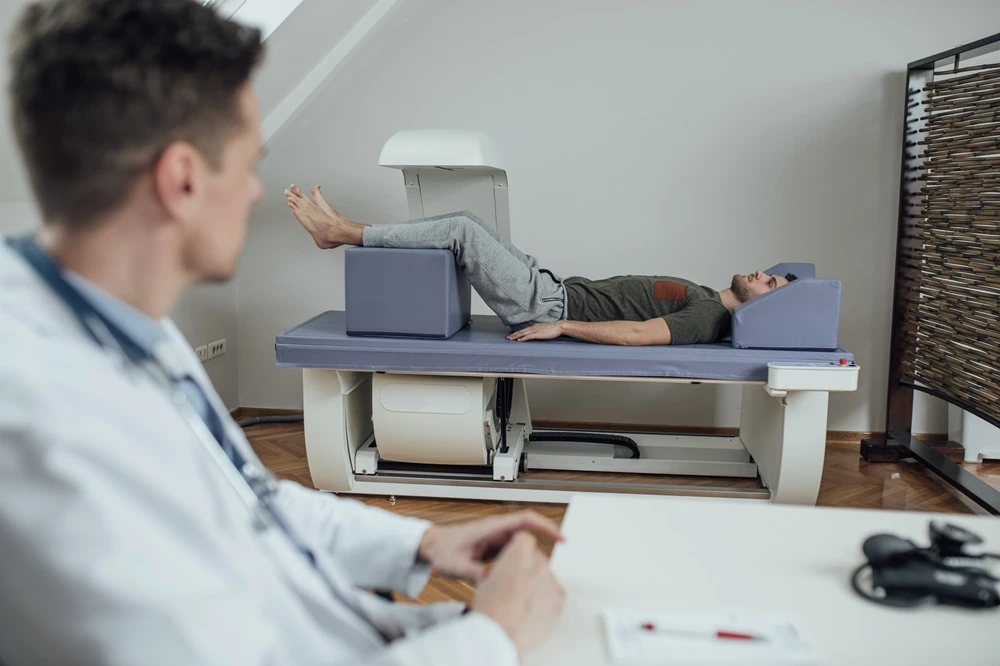
A DEXA scan measures bone mineral density, and it helps identify bone loss. You may have had one ordered due to age, medication use, or a family history of osteoporosis. Understanding your results helps you have more productive conversations with your clinician, while putting you in a stronger position to act.
Understand Your DEXA Scores
Your DEXA scan produces two key measurements. This is a T-score and a Z-score. The T-score compares your bone density to that of a healthy adult, and clinicians use it as the main number for diagnosis. You may have osteopenia, which means your bones are thinner than average but not at the fracture-threshold. If your T-score is at the clinical threshold for osteoporosis, your provider will usually create a follow-up plan. The Z-score compares your density to that of others your age and body size. It is more useful for younger adults and children, and a low Z-score may prompt further evaluation. If your Z-score is at or below the expected level, your bone density is generally below the expected range for your age.
Identify Your Risk Factors
A T-score alone does not tell the full story, and several personal factors influence your actual fracture risk. Age, body weight, prior fractures, smoking history, and long-term corticosteroid use all contribute to your overall risk profile. The same T-score can mean different things for two people, because their other risk factors are not identical.
A previous fragility fracture raises your risk even when your bone density appears only mildly reduced. Family history matters, and a parent with a hip fracture increases your own likelihood of one. These details help your provider decide if your numbers call for monitoring or treatment. Bone density can vary by site, and your spine and hip scores may differ. If one area shows greater loss than another, your provider will use that pattern.
Act on Your Results
If your results show osteopenia or osteoporosis, a conversation with your clinician is the appropriate next step. They can review your full risk profile, discuss lifestyle modifications, and determine whether medication is appropriate. Lifestyle changes often target the habits that affect bone strength most directly, so follow the plan set by your provider. The plan can include:
- Weight-bearing exercise to support bone density
- Adequate calcium intake through diet or supplements
- Vitamin D supplementation to aid calcium absorption
- A medication review, since some drugs contribute to bone loss
Ask which changes apply to your situation, and request specific targets you can follow. If medication is recommended, discuss the expected benefits, the duration of treatment, and how progress will be measured. You do not need to interpret your results in isolation. Your provider is best equipped to guide your response.
Discuss Your DEXA Scan Today
Your DEXA scan results give you actionable information about your bone health, and understanding them helps you engage more confidently with your care team. The key takeaway is this: your T-score provides a clinical baseline, your risk factors shape the bigger picture, and your follow-up plan is where change actually happens. Ask about your FRAX score if it has not been discussed. Confirm when your next DEXA scan is scheduled.