Autism affects how children communicate, interact, respond to sensory input, and build relationships in social environments. With the right support, structure, and understanding, children can become more comfortable participating in group activities, school settings, and community spaces. Here are some ways to support children with autism in social settings:
Preparing for Social Events
Preparation gives a child with autism a sense of what to expect, and this can reduce uncertainty before a social event. You can talk through the plan together, describe who will attend, and explain how long the visit will last. Visual schedules or picture cards work well; they give children a clear reference point they can return to. When a child knows the structure of an event, the experience often becomes more manageable. Practice may also build confidence ahead of time; role-play greetings, take turns during a pretend conversation, or walk through common situations the child may face.
Creating Sensory-Friendly Spaces
Children with autism respond strongly to sensory input, so adjusting the environment is a key step. The following changes can make a setting more comfortable:
- Quiet zones: Set aside a calm area where a child can take a break, away from noise and crowds.
- Soft lighting: Lower bright or flickering lights when possible, and use natural light where possible.
- Reduced noise: Limit loud music or sudden sounds, and offer headphones if the child prefers them.
- Comfort items: Allow a familiar object, such as a favorite toy or fidget tool, to provide steady comfort during a busy event.
- Clear pathways: Keep walkways open and uncluttered so the child can move freely.
Adjustments like these create a setting where a child can engage more comfortably and be at ease.
Encouraging Communication
Communication looks different for every child, and respecting that supports stronger connection. Some children with autism speak freely, while others rely on gestures, devices, or visual aids to share their thoughts. You should follow the child’s lead, give them time to respond, and avoid rushing the exchange. When a child is not pressured to respond quickly, conversation often flows more naturally.
Clear and simple language is helpful in these moments. You may use short sentences, name objects directly, and pair words with pictures to support understanding. Showing a picture of a snack while offering it makes the message easier to follow.
Building Peer Connections
Peer connection grows when children with autism have structure and gentle guidance. The strategies below can support friendly and positive interaction:
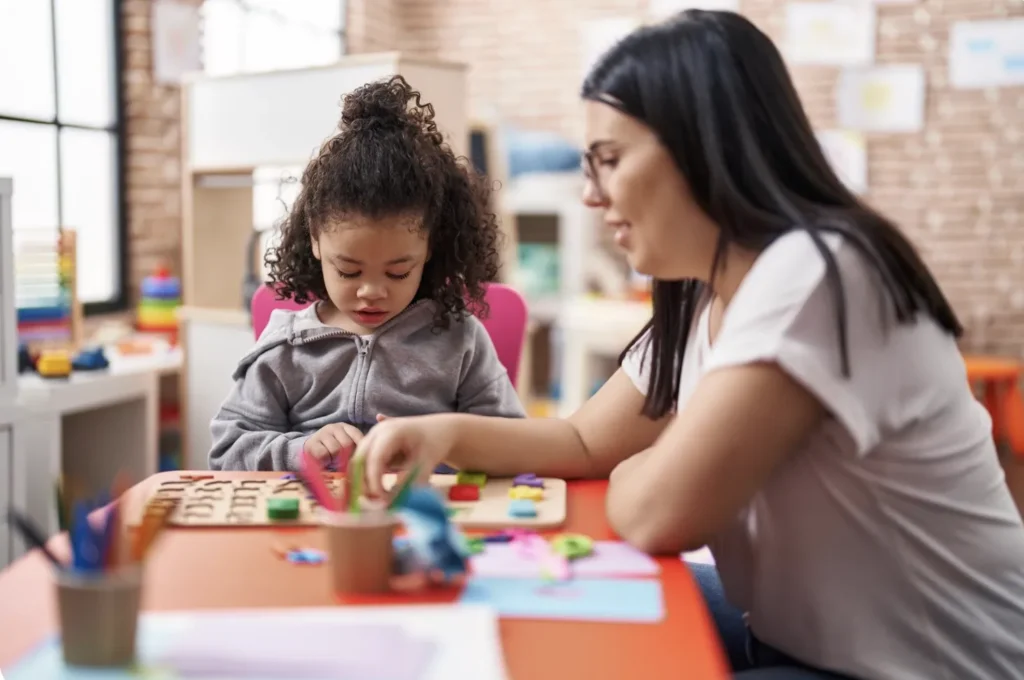
- Shared activities: Choose games or projects with clear roles and turns. Structured play gives children a common focus and a built-in reason to interact.
- Small groups: Start with one or two peers rather than a large crowd. Smaller groups are less overwhelming and make conversation easier to manage.
- Modeling behavior: Show kind greetings and turn-taking through your own actions. Children often learn social steps by watching adults and peers around them.
- Common interests: Pair children who share a hobby or favorite topic. Shared interests create an easy starting point for conversation and connection.
With steady support and shared activities, children can build friendships at a pace that suits them.
Book Your Autism Appointment Today
Supporting children with autism in social settings starts with preparation. Other factors include creating a comfortable environment, promoting communication, and encouraging guided peer interaction. Each step works together to help a child feel more secure and engaged during gatherings and events. Contact a qualified pediatric neurologist near you to book your autism appointment today.