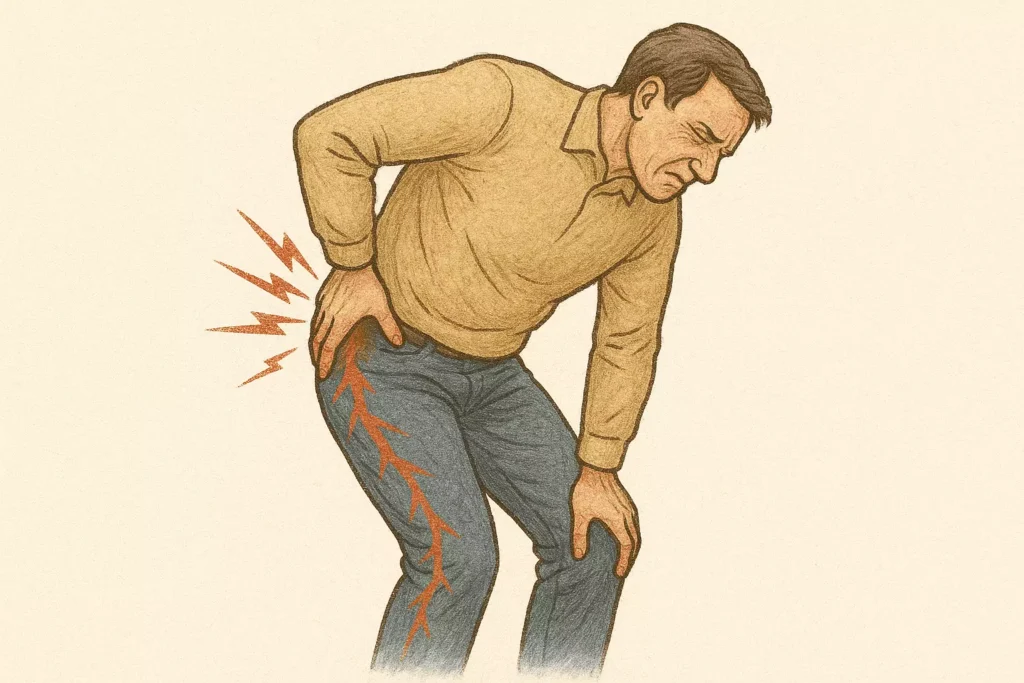
A herniated disc occurs when the soft inner part of a spinal disc pushes through its outer layer, potentially placing pressure on nearby nerves. This condition can cause pain, numbness, tingling, and muscle weakness, depending on the location and severity of the affected disc. Here are some early herniated disc symptoms to watch for:
Identifying Early Spinal Pain
Localized neck or lower back pain is often one of the first herniated disc symptoms. The discomfort usually stays near the affected disc, and people often describe it as dull, sharp, or burning. Pain may also increase after sitting for long periods, bending forward, or lifting objects. Coughing or sneezing can also worsen it, as these actions briefly increase pressure on the spine. Track when the pain starts and which activities make it better or worse. A symptom log gives a provider useful details during an evaluation.
Recognizing Radiating Sensory Symptoms
Pain that travels away from the spine is a key sign of possible nerve involvement. A herniated disc that presses on a nerve root often sends sensations along that nerve’s path. The location of these herniated disc symptoms usually depends on which section of the spine contains the affected disc.
Symptoms in the Arms
A herniated disc in the neck often produces pain that spreads into the shoulder, arm, or hand. Tingling commonly appears in the fingers, and some people describe a “pins and needles” sensation. These symptoms often affect only one side of the body. Certain neck movements, such as turning or tilting the head, tend to intensify them.
Symptoms in the Legs
A herniated disc in the lower back frequently causes pain that moves through the buttock and down the leg. This pattern is commonly called sciatica, and it often extends below the knee into the foot. Numbness or tingling sometimes accompanies the pain, especially after long periods of standing or sitting.
Noticing Weakness and Immobility
Muscle weakness develops when a compressed nerve no longer sends clear signals to the muscles it serves. You may experience difficulty gripping objects, lifting your arm, or holding a cup steadily. In the legs, weakness often appears as stumbling, tripping, or trouble rising onto your toes or heels. Some people develop foot drop, which means the front of the foot drags while walking. Limited mobility often accompanies these changes. Stiffness reduces how far you bend, twist, or turn your neck, and routine tasks like dressing or driving become harder.
Seeking Care for Concerning Symptoms
Some herniated disc symptoms improve with rest and activity changes, while others require prompt care. Contemplate scheduling an evaluation if pain lasts longer than a few weeks or keeps returning. Seek immediate medical attention if you notice any of the following signs:
- Loss of bladder or bowel control: Sudden changes in control require emergency care.
- Numbness in the groin or inner thighs: Loss of sensation in this area needs urgent evaluation.
- Progressive weakness: Weakness that worsens over hours or days signals increasing nerve pressure.
- Symptoms in both legs: Numbness or weakness on both sides points to a broader problem.
- Severe pain that does not ease with rest: Constant and intense pain requires a prompt medical review.
Address Your Herniated Disc Symptoms Today
Herniated discs can cause discomfort ranging from mild to severe, and recognizing the primary symptoms is key for timely intervention. Diagnostic tools like physical exams and imaging tests play a significant role in identifying the issue. Treatment options, including physical therapy, spinal injections, or surgery, are tailored to individual needs. To address your herniated disc symptoms, contact a qualified orthopedic spine surgeon near you to schedule your appointment today.