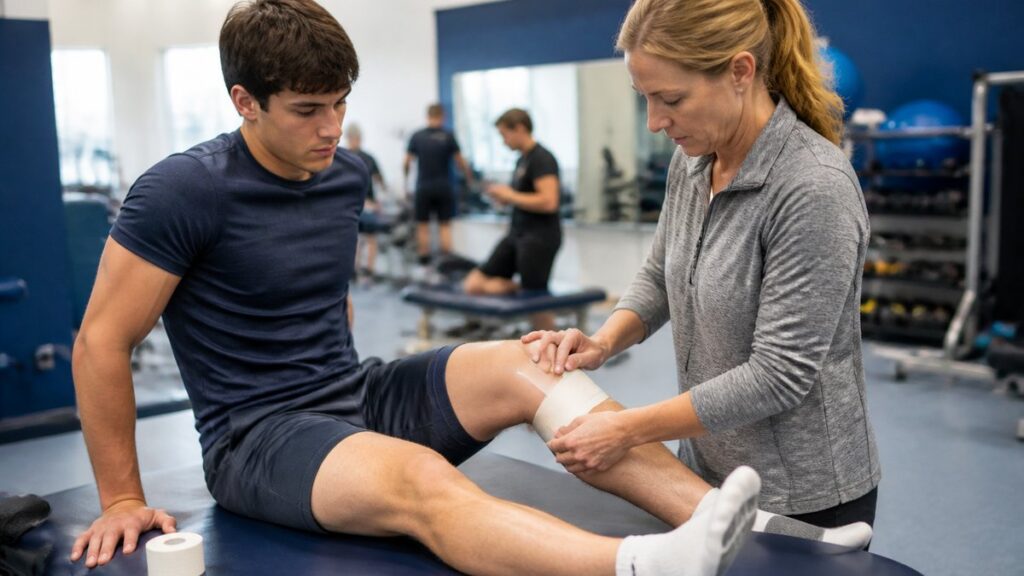
A sports injury ranges from mild sprains and muscle strains to fractures and joint damage, with treatment depending on injury severity. While minor injuries may respond to rest or bracing, more severe conditions may require imaging, casting, injections, or surgery. Orthopedic specialists evaluate the affected area and recommend treatment options based on the diagnosis, symptoms, and individual recovery needs. Here are a few common sports injuries and their treatments:
Treating Sprains and Strains
Sprains and strains are a common sports injury that affects different types of soft tissue. A sprain involves stretching or tearing a ligament, while a strain affects a muscle or tendon. Sprains frequently occur in the ankles, knees, and wrists, whereas strains often affect the hamstrings and lower back.
Mild sprains and strains may respond to rest, ice, compression, and elevation during the initial recovery period. Depending on the injury, orthopedic specialists may recommend bracing or physical therapy to support healing and restore movement. Because severe injuries sometimes involve significant tissue damage, providers are able to use MRI scans to evaluate the affected area. Surgical treatment is appropriate for certain severe tears when nonsurgical approaches are insufficient.
Managing Fractures and Breaks
Fractures occur when bones crack or break, often resulting from direct impacts, falls, or repetitive stress during physical activities. Common sports-related fractures affect the hands, wrists, feet, and ankles. Symptoms may include pain, swelling, bruising, and difficulty moving or bearing weight on the affected area.
Orthopedic specialists typically use X-rays to identify fractures and assess bone alignment. When additional injuries are suspected, providers may recommend MRI scans to evaluate surrounding soft tissues. Many fractures heal with casting or bracing, which helps stabilize the bone during recovery.
More complex or displaced fractures may require surgery to restore proper alignment and stability. Surgical procedures sometimes involve plates, screws, or pins to hold fractured bones in position. Because recovery depends on injury severity, bone location, and individual health factors, treatment plans and healing timelines vary between patients.
Addressing Tendonitis and Overuse Injuries
Tendonitis involves irritation or inflammation of a tendon, often developing from repetitive movements during sports or physical activities. Athletes who run, swim, or play tennis may experience symptoms in the shoulders, elbows, or knees. Because overuse injuries develop gradually, discomfort may increase over time and interfere with regular movement. Treatment approaches include:
- Resting affected tendons to reduce repetitive strain during recovery
- Modifying physical activities to limit movements that aggravate symptoms
- Using anti-inflammatory treatments to manage pain and inflammation when appropriate
- Receiving corticosteroid injections to provide short-term relief in selected cases
- Exploring platelet-rich plasma injections as a potential treatment for certain chronic tendon conditions
- Participating in physical therapy to restore strength, flexibility, and movement
Orthopedic specialists evaluate symptom severity and tendon health before recommending treatment, while rehabilitation plans help guide a gradual return to activity.
Healing Dislocations and Ligament Tears
Dislocations occur when bones shift out of alignment, while ligament tears often result from sudden movements or direct impacts. Both injuries are able to cause pain, swelling, and joint instability. Orthopedic specialists use physical examinations and imaging to assess damage and determine appropriate treatment. Depending on severity, treatment includes joint realignment, bracing, physical therapy, or surgery.
Schedule a Sports Injury Evaluation
Sports injuries range from mild sprains to complex fractures and ligament tears that may require specialized treatment. Orthopedic specialists evaluate symptoms through physical examinations and imaging tests, including X-rays or MRI scans when appropriate. Because injuries vary in severity, treatment plans address individual recovery needs, mobility limitations, and activity goals. Schedule a sports medicine evaluation today to discuss your symptoms and explore treatment options that support your recovery.