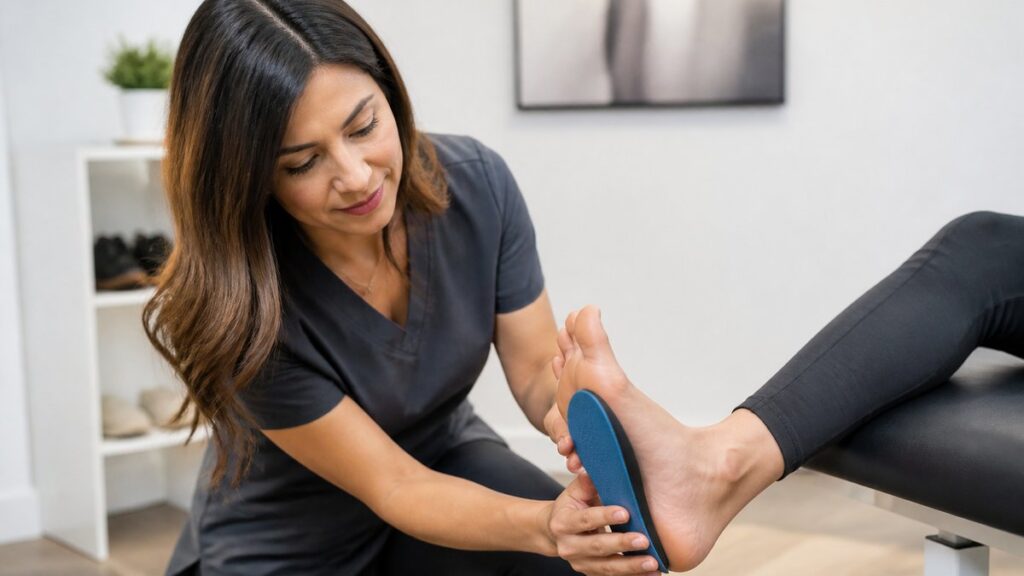
Custom orthotics are personalized shoe inserts designed to support foot alignment, redistribute pressure, and address specific structural concerns. Unlike over-the-counter inserts, custom orthotics are created using measurements, scans, or impressions of a patient’s feet following a podiatric evaluation. Because foot mechanics may affect the ankles, knees, hips, and lower back, orthotics help manage discomfort and improve support during daily activities. Here is more information about the role of custom orthotics in foot health:
Understanding Custom Orthotics
Custom orthotics are specialized shoe inserts designed to support foot alignment, redistribute pressure, and address individual foot conditions. Podiatrists evaluate foot structure, walking patterns, and posture before recommending an appropriate orthotic design. Unlike over-the-counter inserts, custom orthotics are created using scans, measurements, or impressions of a patient’s feet. These measurements help produce inserts tailored to individual foot shapes and support needs.
Foot structure varies between patients, and differences in arch height or alignment may affect walking and standing. Some patients have flat feet, while others have high arches that create uneven pressure across the soles. Because these conditions affect foot mechanics differently, podiatrists assess each patient’s symptoms and movement patterns before recommending treatment. Custom orthotics provide individualized support that may help reduce discomfort and improve foot function during daily activities.
Treating Common Foot Conditions
Custom orthotics help manage various foot conditions by providing individualized support, improving alignment, and redistributing pressure across the feet. Because foot structure and walking patterns vary, podiatrists recommend orthotics based on each patient’s symptoms and physical examination. Common conditions and concerns addressed with custom orthotics include:
- Supporting flat feet by providing additional arch support
- Accommodating high arches by distributing pressure more evenly
- Reducing pressure points by limiting excessive friction during movement
- Improving ankle stability by supporting foot positioning and alignment
- Managing calluses by reducing repeated pressure on affected areas
- Accommodating foot deformities by providing support for structural differences
Choosing the Right Materials
Custom orthotics use materials such as rigid plastic, lightweight carbon fiber, and softer fabrics to address different support and cushioning needs. While some patients benefit from full-length inserts, others require smaller heel supports to manage localized discomfort or pressure. Because foot conditions and activity levels vary, podiatrists evaluate individual needs before recommending appropriate materials, designs, and fitting methods.
Supporting Long-Term Foot Health
Custom orthotics may support long-term foot health by improving alignment, redistributing pressure, and reducing discomfort during daily activities. Although orthotics may function as a standalone treatment, podiatrists often recommend additional foot care practices based on individual needs. These practices may include:
- Choosing supportive footwear to accommodate orthotics and promote proper foot positioning
- Adjusting daily activities to reduce repetitive strain and excessive pressure
- Monitoring foot health to identify changes in discomfort, alignment, or skin condition
- Scheduling regular evaluations to assess orthotic fit and treatment progress
- Managing chronic conditions to support foot health and reduce potential complications
Because foot structure and health needs vary, custom orthotics provide individualized support that standard shoe inserts may not offer. Regular podiatric evaluations help determine whether adjustments or additional treatments are appropriate.
Schedule With a Podiatrist Today
Persistent foot pain may indicate structural concerns that affect walking, standing, and daily activities. A podiatrist evaluates foot and ankle function through physical examinations and imaging when appropriate. Because foot conditions vary, treatment recommendations may include custom orthotics designed to support alignment, redistribute pressure, and manage discomfort. Schedule a podiatry consultation today to discuss your symptoms and explore custom orthotic options suited to your needs.