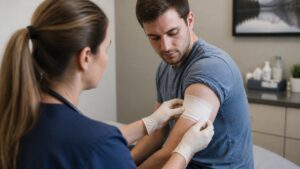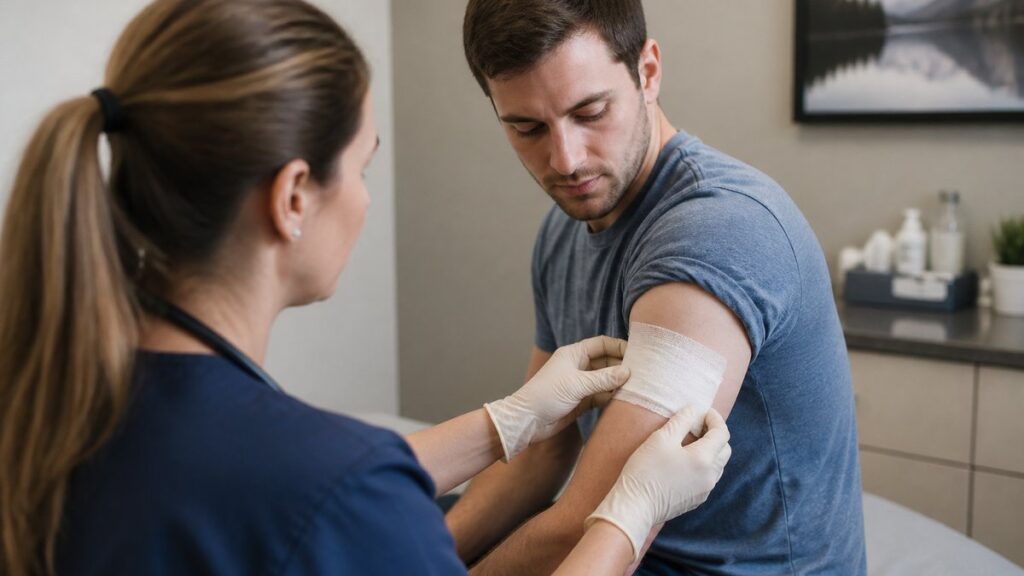
Most minor cuts and scrapes close on their own, without medical attention. Several health factors may influence how a wound progresses, and these include vascular disease, diabetes, and older age. Recognizing these factors can help you identify when a wound will benefit from professional wound care.
What Wounds Require Care?
Any wound that does not heal as expected warrants evaluation by a provider, but certain types of wounds tend to require closer monitoring and specialized treatment. For people with diabetes, even a small wound can be treated as complex. Other wounds that benefit from treatment include:
- Minor Burns: Surface-level burns that may need monitoring and dressing changes as the skin recovers.
- Nonhealing Surgical Wounds: Incisions that reopen, drain, or fail to close in the expected timeframe after a procedure.
- Venous Stasis Ulcers: Wounds that usually form on the lower legs when blood collects in the veins instead of flowing back toward the heart.
- Vasculitis-related Ulcers: Sores associated with inflammation of the blood vessel walls.
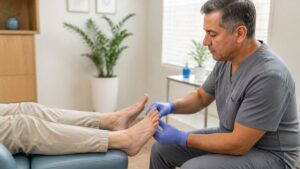
- Diabetic Foot Ulcers: Open sores that often develop on the bottom of the foot and may go unnoticed if nerve damage has reduced sensation.
Changes in circulation and sensation can allow a minor injury to progress before it is noticed.
What Are the Signs?
Some redness, warmth, and swelling around a new wound are part of the normal inflammatory phase, but these changes typically fade within a few days. Symptoms that persist or intensify may indicate that healing has stalled or that an infection has developed. Signs that warrant evaluation vary, including:
- Fever that lasts longer than expected
- Redness or swelling that lingers or spreads to nearby skin
- Pain that grows worse or does not ease over time
- Drainage that is thick and appears yellow or cloudy
- Odor coming from the wound
A wound may need attention even when none of these symptoms appear. If a wound shows no visible improvement after two weeks, a provider can assess what is interfering with recovery.
What Does Wound Care Involve?
Wound care typically begins with an assessment. A provider is able to examine the wound, and they can use Doppler ultrasound to evaluate blood flow in the surrounding area. The findings help guide a treatment plan, which may include one or more of the following approaches.
Dressings and Compression
Advanced dressings are designed to manage moisture. They aim to protect the wound, and this can support a stable healing environment. For wounds related to poor circulation in the legs, compression therapy may apply steady pressure to help move blood back toward the heart.
Oxygen Therapy
Chronic wounds can have reduced oxygen levels. During hyperbaric oxygen therapy, a patient breathes pure oxygen inside a pressurized chamber. The increased pressure allows more oxygen to dissolve into the blood, and this may help it reach the affected tissue.
Patient Education
Treatment can extend beyond the clinic. Providers may offer guidance on nutrition that supports tissue repair. They can also provide instruction on cleaning and dressing the wound at home, and some are able to educate patients on managing blood sugar for those with diabetes.
Seek Professional Wound Care
Healing at home may be supported by a few consistent habits. Keeping the wound clean and covered can help facilitate recovery. Wounds that linger tend to become more difficult to manage over time, and early evaluation allows a provider to identify underlying causes such as poor circulation or infection. If you have a wound that is not improving or are noticing any of the warning signs described above, contact a wound care provider to arrange an assessment.