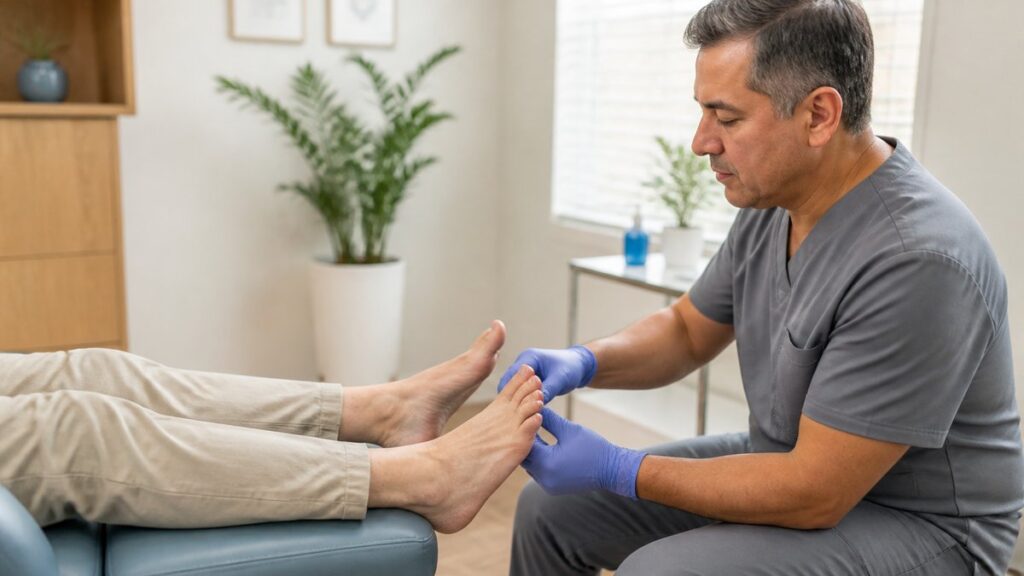
Fungal nails occur when fungi affect the toenails or fingernails, causing changes in color, thickness, and texture. Because feet often stay enclosed in shoes and socks for hours, toenails are exposed to warm, damp conditions. Fungi thrive in this environment, so keeping your feet clean and dry can reduce the risk of infection. Here are some hygiene habits that support clean, healthy-looking nails:
Keeping Nails Clean and Dry
Daily washing is the foundation of nail hygiene, especially for those with risk factors such as a weakened immune system. Scrub your feet with mild soap and warm water each day. Pay close attention to the areas around the nails and between the toes, where moisture may collect. After rinsing, dry your feet thoroughly with a clean towel, and spend extra time drying between each toe.
Towel care is a fundamental step. Use a separate towel for your feet when possible, and hang it to dry completely after each use. Launder it every few days, as damp towels may hold residual moisture and defeat the purpose of drying your feet.
Trimming technique is also key, as it influences how well you maintain your nails. Cut toenails straight across and keep them even with the toe tip; rounding the corners too far allows edges to press into surrounding skin. Trim nails when they are softer, such as after a bath or shower, and smooth any sharp edges with a nail file. Sanitize clippers before and after each use. You can also trim visibly different nails last to limit cross-contamination between toes.
Selecting Supportive Footwear
Shoes that fit well and allow air to circulate around the toes help reduce the heat and moisture buildup fungi need to thrive. Breathable materials let moisture escape throughout the day, while tight shoes press against the nails and restrict airflow. Rotating between at least two pairs of shoes gives each pair a full day to dry out. Store shoes in a dry, ventilated area rather than a sealed gym bag, and replace pairs once the lining breaks down. You may also sprinkle foot powder inside your shoes to absorb excess moisture between wearings. Sock choices support the same goal of preventing fungal nails. Moisture-wicking fabrics help pull sweat away from the skin, keeping feet drier for longer. Change your socks daily, and switch to a fresh pair mid-day if they become damp from activity.
Protecting Feet in Shared Spaces
Public pools, gyms, and locker rooms create high-risk environments for nail hygiene. Wear shower sandals or flip-flops on wet surfaces, and keep them on until you reach a fully dry area. Pack a small towel and a clean pair of socks in your gym bag so you can dry your feet and change right after your workout.
When at home, avoid sharing clippers, files, or towels with other household members. Give each person a labeled kit for personal use. Check your nails weekly for changes in color, thickness, or shape, and schedule a visit with a podiatrist or dermatologist if anything looks different. A professional can offer treatments like antifungal creams and oral medications; some also provide laser therapy to kill the fungus.
Find Treatment for Fungal Nails
Preventing and managing fungal nails involves consistent daily habits. Keep feet clean and dry, trim nails correctly, select breathable footwear and socks, and stay vigilant in shared spaces. Signs of fungus include discolored or cloudy nails; a thick or flaky texture may also suggest this condition. If you notice any changes in your nails, book an appointment with a podiatrist today.