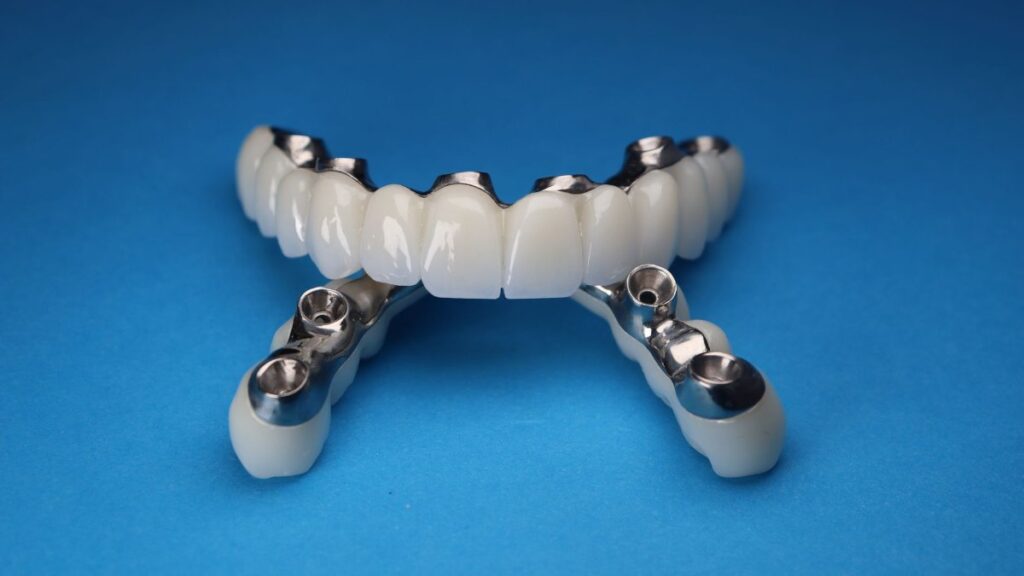
All-on-6 is a dental treatment that replaces a full arch of teeth with a fixed bridge, and it attaches to six titanium implants placed in your jawbone. Unlike dentures, the bridge stays in place, and only your dentist removes it for cleaning or repairs. Before your dentist recommends it, they will review your bone, gums, and overall health. This is when this restoration is needed:
Multiple Missing Teeth
Some people lose teeth one at a time, and others lose several teeth after decay or gum disease. When most teeth in an arch are missing or failing, single implants may not be practical. A full-arch bridge replaces the entire row at once. This approach also avoids placing many separate implants.
Your dentist reviews your remaining teeth and gums at an exam. They look at decay, root health, and bone support, and they note any loose teeth. All-on-6 may fit your situation if you have one or more of these conditions:
- Most or all teeth missing in one arch
- Several teeth with severe decay or cracks
- Loose teeth from advanced gum disease
- Failed crowns or bridges across the arch
Adequate Bone Volume
Each of the six implants needs its own section of healthy bone. If your jaw has enough height and width, your dentist may place all six without grafting. Bone volume varies from person to person, and tooth loss often reduces it over time. Your dentist measures both factors before planning surgery.
Your dentist takes a 3D scan of your jaw, and the images show bone height and width. This scan takes only a few minutes. You sit upright while the machine rotates around your head. The dentist uses these measurements to plan where each implant will sit.
When the scan shows too little bone, a bone graft may add volume first. Grafts need several months to heal, so your timeline may grow longer. Some patients choose All-on-4, a similar option with fewer implants. Your dentist will explain which path matches your bone.
Less Lower Jaw Density
Bone density refers to how solid and compact your jawbone is. Softer bone gives each implant a weaker hold. The upper jaw typically has lower density, and bone loss from missing teeth may reduce it further. Smoking and some medical conditions may also affect density.
Six implants spread chewing forces across more points of support. Each implant carries a smaller share of the load, and this may reduce strain on softer bone. Your dentist checks density on your scan before they decide how many implants you need. Some patients with soft bone may also need a graft.
Unwanted Dentures
Dentures rest on your gums, and they may shift during meals or conversations. Some wearers also dislike adhesives. Lower dentures often feel less stable than upper dentures. Patients typically receive a temporary bridge soon after surgery. People often explore All-on-6 when they notice these issues:
- Dentures that slip, rock, or click
- Sore spots on the gums
- Trouble chewing firm or crunchy foods
- Frequent relines or adjustments
Schedule All-on-6 Restorations
Before you commit to treatment, a consultation gives you clear answers about your options. Your dentist reviews your scan, and they explain costs, timelines, and insurance questions in plain terms. Bring a list of your questions to the visit. You may book your consultation online or by phone.